BUILT BY HER
michelle li on turning climate anxiety into climate action
october 23th, by anna cai

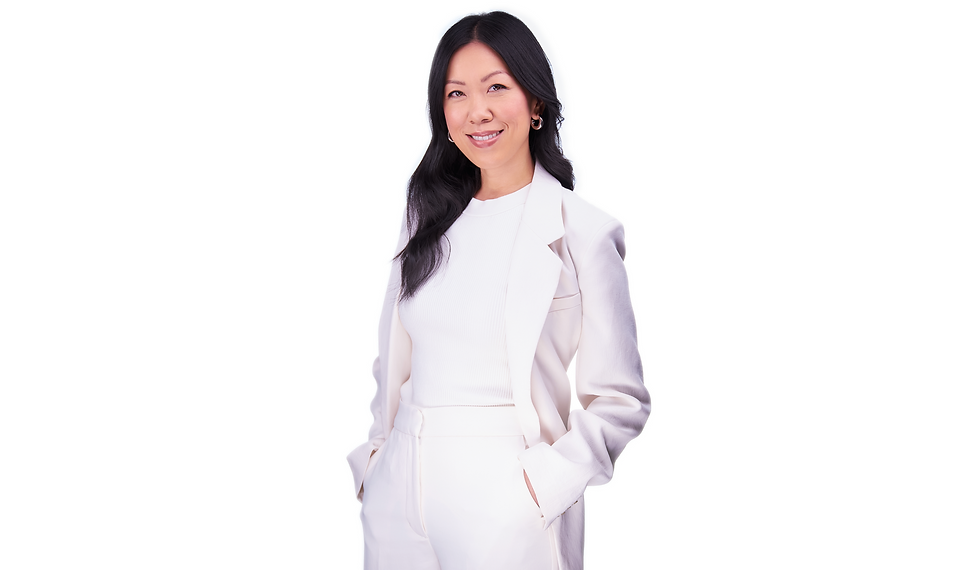
Environmental Advocate, Keynote Speaker, and Founder of two global climate organizations, Michelle Li didn't set out to build either one.
She started in science, earning an undergraduate degree in biology and chemistry from the University of Waterloo, then a master's in cancer genetics from the University of Toronto. From there she moved into the medical device industry and eventually to San Francisco for business school, which is what changed everything. She landed on the sales side at Salesforce and DocuSign, meeting clients and learning new industries, in cultures where giving back wasn't optional. "We have volunteer time off, and employees are expected to use it," she says. "It's part of the KPIs by which you as an employee are evaluated." Between that and running sustainability initiatives at DocuSign, something shifted. "One thing led to another, and I realized, okay, I really want to do more."

The push came during COVID, while she was living in London. She kept noticing how ordinary sustainability was there, refilling shampoo in her own jar at a corner store, transit that just worked, and started volunteering with a local nonprofit in her spare time. "I had time, and I volunteered for a local non-profit, learned a lot there, and then I decided that I wanted to try my own thing," she says. "That's what started Clever Carbon. It was a side project, just something that I did for fun, and six years later, it's now my full-time job."
The leap wasn't quick. Michelle is candid that leaving a stable job for climate entrepreneurship demanded more patience than she expected, since the relationships she built didn't pay off right away. "There are opportunities that started maybe four years ago that came to fruition now," she says. "You need that patience, and you need resources for yourself to weather the storm." Her takeaway, one she says has held true since her research days: "Things take time, and relationships are everything."
Clever Carbon's whole approach grew out of what she'd seen in enterprise marketing, that even something as unglamorous as a database can become a brand people love. She wanted sustainability content to work the same way, without losing the substance underneath. "The hip and fun branding looks familiar, is safe, and we teach people hard facts and information," she explains, pointing to numbers like the carbon footprint of a vegetarian meal (600 grams) versus beef (7,700 grams). "It's just like a nutrition label. It's not saying you're going to have heart disease in five years. It's just giving you information, so at the point of decision-making, you can make an informed decision."
Women and Climate, which she co-founded with Stephanie Corbally, started from a much more personal need. New to New York and new to climate work, Michelle kept ending up in rooms with few other women, having rushed, transactional conversations. She wanted something slower: a real discussion over dinner. The idea spread on its own as she traveled, one dinner in London, another in Hong Kong, until chapters took root across more than 50 cities. Keeping that growing further, that's the challenge, she says, since "cultures are very different between the 50 cities that we're in," and a single playbook rarely fits all of them.
Her advice for anyone weighed down by climate anxiety starts with learning, not doing. She points to a Coursera course by the University of Illinois Urbana-Champaign, Introduction to Sustainability, that gave her a full picture of planetary systems before she ever thought about carbon accounting. From there, she says, find what specifically pulls at you, whether that's food or renewable energy, and let the action follow: biking instead of driving, eating more plant-based, volunteering for a cause. "Once you start learning, once you start really finding what's interesting to you and then continuing that journey," she says, "when you roll up your sleeves, you really don't have time to have anxiety as much." Her Women and Climate co-founder, she adds, found the same thing true once she got busy building the organization: the anxiety had nowhere left to sit.