BUILT BY HER
SARAH
GHAZI on building a career in aviation and aerospace
August 19th, by lavinia ricca
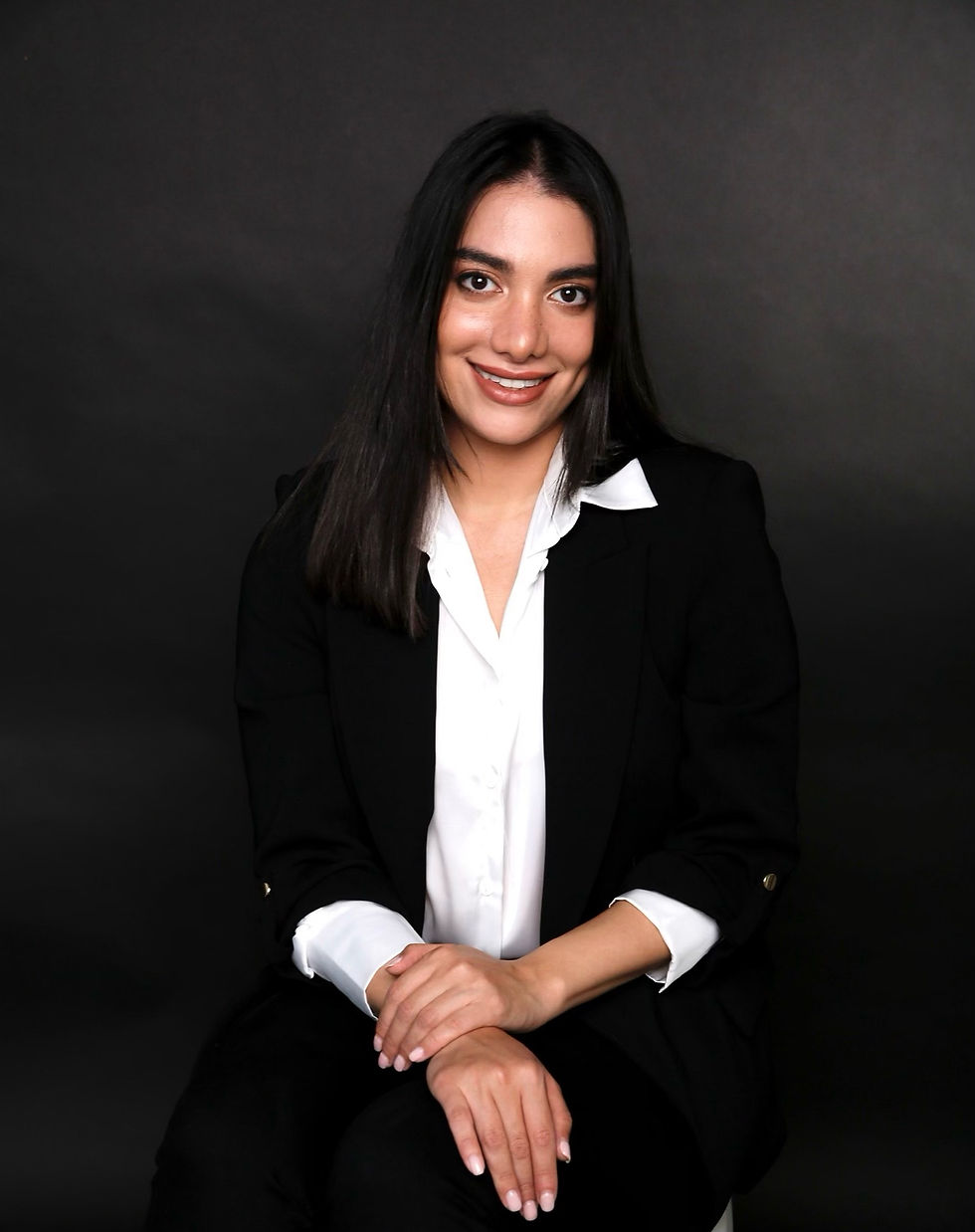
Unlike many of her colleagues who grew up dreaming of rockets, Sarah's fascination with space was something that developed gradually. Engineering and problem-solving came naturally to her early on, but it took years of exploration to find where she truly belonged in the field. "My passion for space definitely developed over time," she says. "It kind of took a few years for me to find where I truly fit within the aerospace industry."
Her first job out of university was in medical devices, where she learned the fundamentals of how engineers and teams operate inside a company. It was an open house at Bombardier that ignited her passion for aviation. "That day I kept on thinking about, oh, I want to go back there," she recalls of the moment that set it all in motion. "I want to work there. I saw myself working there in the long term."

Today, Sarah is an engineer at MDA Space and the volunteer lead for Women in Aerospace Canada. Her path there was anything but linear, and that's exactly the point she wants to convey to young women considering engineering.
Sarah's academic path started with a Presidential Award in high school that gave her the confidence to apply to Canada's top engineering programs. The University of Toronto stood out for several reasons - its global reputation, her desire to stay in Toronto, and the Engineering Science program, which was uniquely suited to her ambitions. A scholarship offer sealed the decision. "That was like the easiest decision ever for me to choose U of T," she says.
If one experience defined her university years, she says, it was her PEY internship - the Professional Experience Year between third and fourth year. "It gave me my first real exposure to how engineering is practiced in the industry, how different teams work together to solve complex problems," she says. Earning her first salary, she says, also got her thinking seriously about personal finance and investing.


Aerospace can sound abstract to outsiders - a world of rockets and spacecraft that seems far removed from daily life. Sarah breaks down one of her core responsibilities in simple terms: quality assurance means building a product correctly and consistently against defined standards. Mission assurance goes further, ensuring that the product will actually perform reliably under real-world conditions, with every risk accounted for.
Success hasn't come without friction. Learning to communicate and collaborate across large organizations, filled with people from vastly different backgrounds and specialties, was one of her biggest early challenges - one she credits strong mentors with helping her navigate. "What really helped me was finding amazing mentors who guided me through these challenging situations," she says, "and they taught me how to navigate them with confidence."
Sarah is candid, too, about recurring bouts of imposter syndrome, especially working alongside highly specialized colleagues in fields like rocket science. There were moments she seriously considered going back for a master's or PhD, but what ultimately kept her grounded was a reminder that hands-on experience carries its own value. Engineering programs build technical fundamentals, she says, but rarely teach the communication and relationship-building that end up mattering just as much in a career. "All of those skills have played a huge role in helping me achieve my goals and navigate my career," she says, "that were kind of developed outside of that classroom."
Ask Sarah who had the greatest influence on her life, and the answer is immediate: her mother. Moving across three countries growing up, her mother made sure the family never lacked opportunity - strong schools, three languages, arts and sports - despite the constant upheaval. "Her patience, determination, her resilience has definitely shaped who I am," Sarah says. "I definitely truly see her as my role model and idol today."
One piece of advice stuck with her above the rest: take the word "no" out of your vocabulary. Rather than treating obstacles as dead ends, she learned to see them as problems requiring a different approach - a mindset she says she's still working to perfect. "That mindset shift has definitely helped me stay positive, be more creative, become a better problem solver throughout my career," she says.


As the first in her family to enter aerospace, Sarah had to build her professional network and support system from scratch. That experience is what eventually drew her to Women in Aerospace Canada, introduced to her by a former colleague. What began as attending a few events grew into membership, then volunteering, and eventually her current role as volunteer lead. "I wanted to give back to society the same way," she says, "and be there for the students who are hoping to study aerospace engineering."
Sarah's message to young women eyeing engineering is direct: believe in yourself, and don't shy away from difficulty - it's what makes the work rewarding. Stay curious, ask questions, and don't feel pressure to have all the answers from day one. "Find good professional mentors, build a strong support system," she advises, "and always remember that you belong in this field."
Outside of work, Sarah is a competitive chess player who enjoys the problem-solving of tournament play, alongside tennis, golf, and skiing. She travels for the chance to experience new cultures and cuisines, reads widely, bikes, walks her dog, and follows Formula One.
Asked what excites her most about the future of Canadian aerospace, Sarah points to the accelerating role of AI and robotics. "Canada has a strong foundation of talent, research and innovation," she says, "which puts us in a great, great position to become a global leader and take advantage of the opportunities ahead."