BUILT BY HER
Riyam Ojaimi, Founder and Scientist, on Building Space for Women in STEM
May 12th, 2026 by lavinia ricca
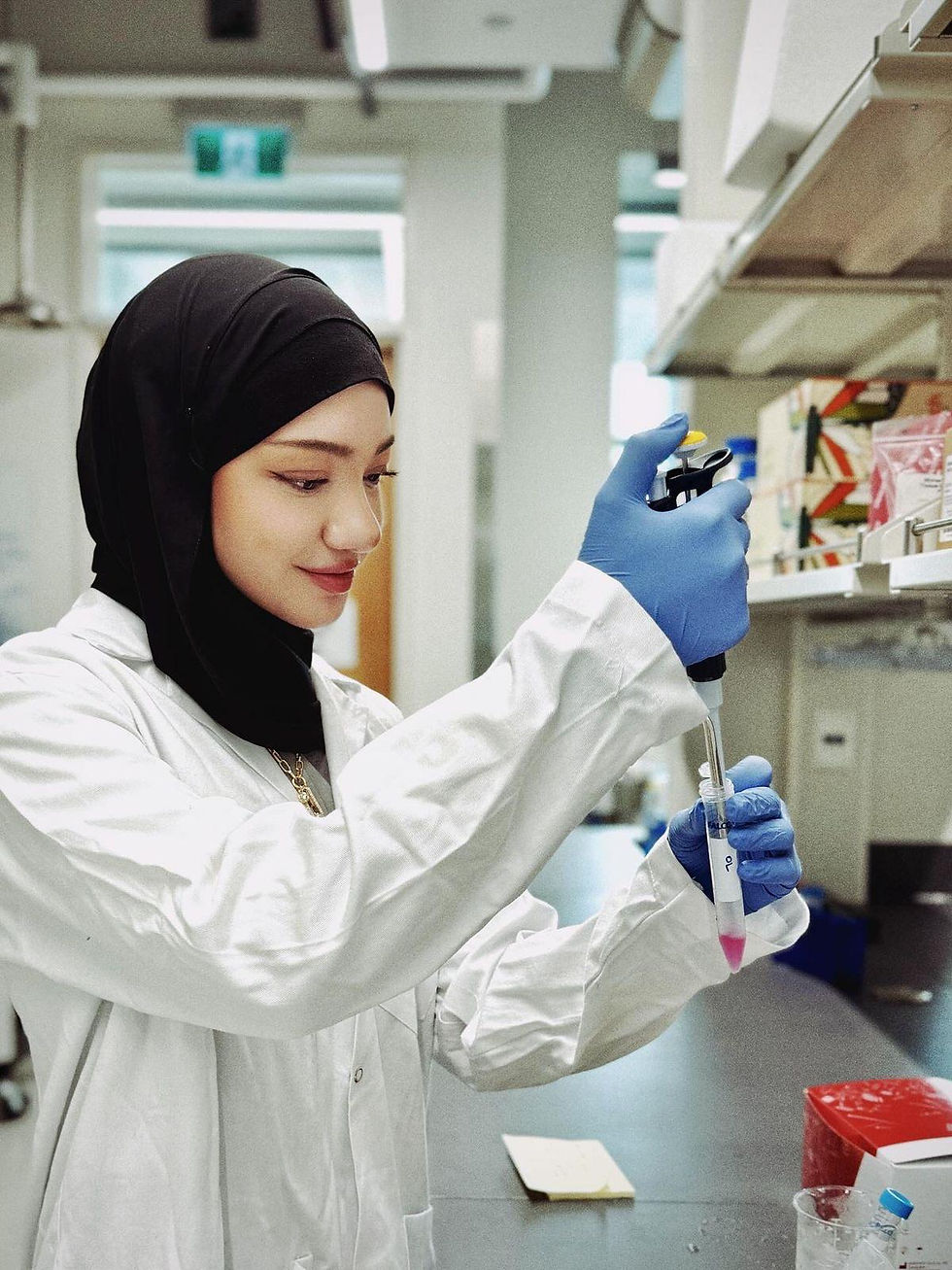
Growing up in Sweden, Riyam Ojaimi spent much of her childhood immersed in science. By middle school, she was already involved in astronomy organizations; by high school, she was defending original research and winning awards through Sweden’s astronomical youth societies. For her final thesis project, she and a friend discovered and characterized a star system - an experience that solidified her fascination with space.
Now a student at the University of Toronto studying psychology and astronomy, Riyam’s work exists at the intersection of both disciplines. Her research focuses on astronaut health, particularly how cognition and behaviour are affected by microgravity and extreme environments. “I’ve always been interested in human performance in extreme conditions,” she explains. “So I thought - why not research this for astronauts, because I love space?”
Moving between countries and educational systems shaped the way she thinks about science itself. In Sweden, students specialize much earlier than in Canada, often entering focused academic streams during high school. Riyam studied life sciences with a mathematics specialization, already working with advanced concepts like linear algebra and vector analysis as a teenager. Research, she explains, was treated not as something reserved for professionals, but as something young people were fully capable of contributing to.
That experience left a lasting impression on her. “Teenagers are very capable of doing research,” she says. “That’s when your creativity and inspiration peaks.”

Yet when Riyam first arrived at U of T, she initially enrolled in a more traditional life sciences pathway. It quickly became clear that she wanted something more interdisciplinary. Rather than remaining within a single field, she shifted toward combining psychology and astronomy - a pairing that now defines her work in astronaut cognition and behavioural health.
For Riyam, interdisciplinarity is not simply an academic preference. In high school, alongside her science studies, she pursued philosophy and photography. She remembers being questioned constantly: philosophy students wondered why a science student was in their classes, while science students questioned why she studied philosophy at all. But to her, the divide never made sense.
“A lot of the early scientists were philosophers,” she reflects. “They weren’t scared of finding connections between different fields.”
That belief continues to guide how she approaches both science and innovation. Her work in astronaut health examines how microgravity affects the brain and behaviour over time, including cognitive decline and impaired decision-making during long-duration missions. She studies how astronauts can remain cognitively engaged in isolated environments, exploring possible countermeasures ranging from non-invasive brain stimulation to virtual reality systems designed to keep the brain active in space.
"A lot of the early scientists were philosophers," she reflects. "They weren't scared of finding connections between different fields."
What excites her most, however, is how space research can directly improve life on Earth. Technologies developed for astronauts often become tools for remote healthcare, communication systems, or medical innovation in underserved communities. Riyam points to vaccine incubation technologies originally developed aboard the International Space Station as one example of how space science can translate into tangible healthcare advancements.
“Space healthcare is also about Earth healthcare,” she explains. “How do we get healthcare to remote environments? How do we deal with communication delays and large distances? Those are problems we face here too.”
Outside of academia, Riyam is also the founder of SpacePoint, a science communication and research platform she launched just before leaving Sweden. Initially created as a personal outlet, the project soon evolved into something much larger. What began as small-scale online science communication eventually grew into a collaborative company bringing together researchers, students, and developers interested in astronomy and exoplanetary research.
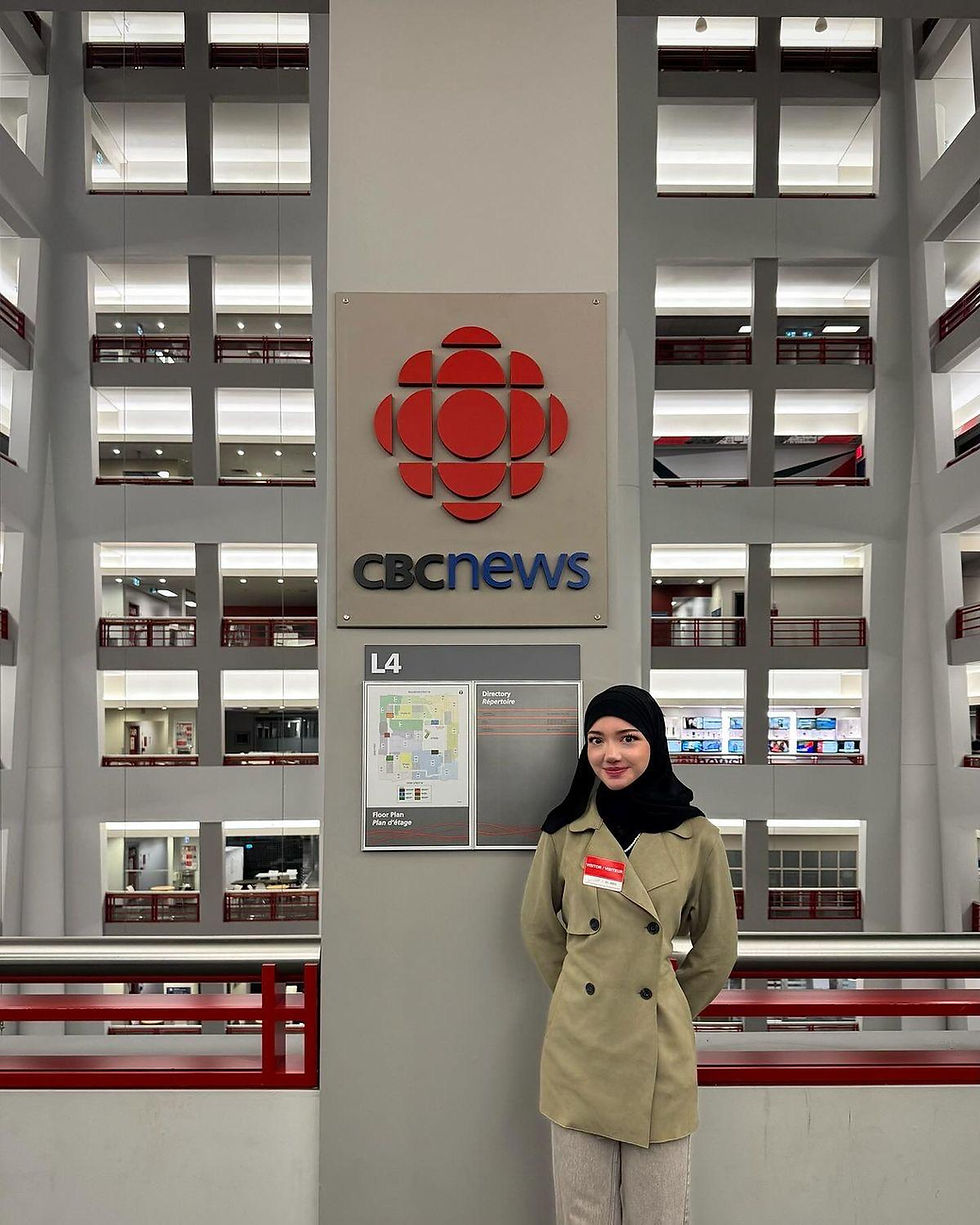
The decision to create SpacePoint was deeply personal. Riyam speaks candidly about feeling constrained within environments shaped by exclusion, and wanting to create a space where she could define herself on her own terms. “I needed to exist in a place where I could be seen for who I am,” she says.
At the same time, she wanted to challenge the idea that space science was inaccessible. Too often, she had been told that loving space could only ever remain a hobby. SpacePoint became her response to that assumption - a platform built around making science more approachable and participatory.
Today, the company is developing software focused on exoplanetary habitability and origin-of-life research, including an algorithm first developed during a NASA Space Apps Challenge hackathon. Riyam hopes these tools will eventually allow more people to conduct their own space-related research and engage directly with scientific discovery.
"I needed to exist in a place where I could be seen for who I am"
Throughout the conversation, Riyam repeatedly returns to one theme: belonging. She speaks openly about social anxiety, imposter syndrome, and the experience of entering rooms where nobody looked like her. As a child, she often escaped into science books as a coping mechanism, later pushing herself to attend science and technology events despite feeling profoundly out of place.
What kept her there, she says, was curiosity.
“Curiosity became my purpose,” she explains. “I’m here for science. I’m here because I like this.”
For women in STEM, particularly young women entering male-dominated spaces, Riyam believes that a sense of purpose is essential. She points to the pressure many women feel to leave science entirely after setbacks - a burden she nearly experienced herself. Instead, she emphasizes the importance of creating, experimenting, and allowing yourself to fail without seeing failure as proof you do not belong.
“Being a scientist and being a founder are actually very similar,” she says. “You have to be really okay with starting over.”
When asked what advice she would give to younger women hoping to enter science, her answer is immediate and unapologetic: speak up.
“If you feel like something is off, don’t be afraid to say it,” she says. “Don’t be afraid to stand up for yourself.”